When Literacy Meets Coding: How Kids Learn Life Cycles and Loops Together
Here’s a fun idea: literacy and coding might seem like totally different things, but they actually have a lot in common. Both are about spotting patterns and making sense of the world around us. And when you bring them together, magic happens — like in Rachel Lemansky’s Library at Charlton Elementary School.
Rachel uses a story about a caterpillar and some cool little robots called KaiBots to teach kids both reading and coding at the same time. Welcome to what we like to call the Literacy Kitchen — where stories and coding come together to cook up curiosity and learning.
How Reading Helps Kids Learn to Code
Reading and coding help each other. When kids understand how stories are structured, it helps them understand how programs work. And when kids learn to code, it helps them think clearly about how stories and instructions should flow.
For example, a paragraph in a story has a certain structure. A program has a structure too. Skip a comma in a story, and it gets confusing. Skip a command in a program, and it doesn’t work.
Rachel’s class uses KaiBots to show this. The kids read a story about a caterpillar, then use coding cards to help their robot move through the caterpillar’s life cycle. It’s a fun way to practice sequencing and prediction — skills important for both reading and coding.
Coding Is the New Kind of Literacy
Coding isn’t just for computers and tech experts anymore. It’s a new way to read, write, and tell stories.
When kids learn to code, they are not just memorizing commands — they’re learning to think logically and solve problems. Imagine giving kids a whole new alphabet made of loops and commands instead of letters and words.
Think of it this way: writing code can be like writing poetry, and fixing bugs in code can be like editing a story to make it flow better. Pretty cool, right?nbsp;
Just like in literacy, coding helps students understand structure, sequence, and purpose. And when they can tell a robot what to do — and watch it follow their story — it brings learning to life in a whole new way.
Phonics and Python Have More in Common Than You’d Think
At first, phonics — learning sounds and letters — and Python — a programming language — seem worlds apart. But when you look closer, they actually share a lot:
- Phonics is like the syntax of coding.
- Sight words are like the functions you memorize.
- Reading fluency is like getting good at debugging code.
So if kids can sound out the word “cat,” they are on their way to breaking down a simple for-loop in code.
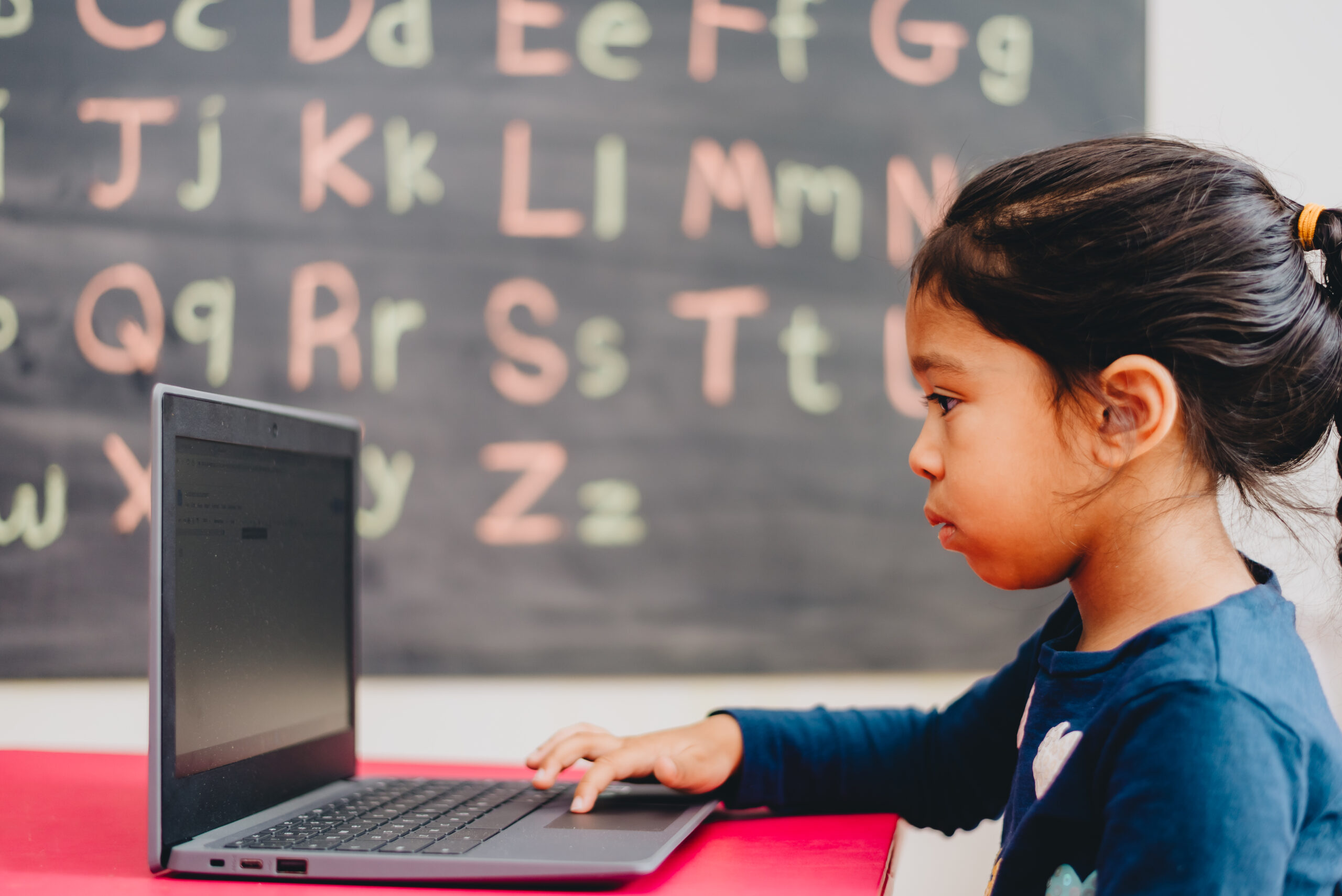
Telling Stories with Robots
Believe it or not, coding is a kind of storytelling. Every “if statement” is like a plot twist. Every function is like a chapter. And every variable is a character waiting to come alive.
When Rachel’s students lay down cards that say “start,” “move forward,” “loop start,” and “loop end,” they are actually building a story with a clear beginning, middle, and end. Their KaiBot caterpillar goes on a journey just like a character in a book.
One of the things I love most about Rachel’s lesson — and about the Literacy Kitchen model overall — is that we start screen-free. Students begin with books, hands-on coding cards, and physical tiles.
They build real-world connections before any device comes into play. Then, when they’re ready, we introduce the screen — and that’s when they get to meet Marshie.
Marshie is our little kitchen robot who cooks up meals based on the code students create. Once they’ve practiced logic and sequencing offline, they get to see Marshie come to life on the screen, completing tasks, following directions, and stirring up some fun. It’s meaningful screen time with purpose — not passive watching, but active learning through code.
Great Coders Are Great Readers
Reading code is like reading on steroids. Before kids can write great code, they need to be able to read great code — just like authors study stories before they write their own novels.
Tools like Kainundrum Lite help with this by starting with screen-free coding cards — kind of like phonics cards for reading — and then moving toward typing code on a screen. This helps kids build confidence and fluency in both reading and coding.
The Secret Sauce: Mixing Literacy, Logic, and Learning
Once upon a time, literacy was just about reading and writing words. Today, literacy means being able to read, write, and understand how machines think.
That’s why the Literacy Kitchen is such a great idea. It blends reading, coding, and thinking in ways that work for all kinds of learners:
- Visual learners can see the butterfly life cycle unfold on tiles.
- Hands-on learners build programs with their hands.
- Kids who learn by listening connect with the read-aloud story.
- Multilingual and neurodivergent learners get support through features like Braille coding cards and talk-back options.
It is a place where literacy meets inclusivity and technology to create learning that sticks.
Want to See It in Action?
Join us for a free webinar with Rachel Lemansky, where she will share how she combines storytelling and coding in her early elementary STEM lessons using Kai’s Education tools.
Webinar Title:
Getting Started with KaiBot – A Focus on How We Can Introduce Coding to Our K–1 Learners and How KaiBot Can Support Any Classroom Curriculum
Date:
October 21, 2025 (October 22 NZT)
Time:
3:00 PM CDT | 4:00 PM EST | 9:00 AM NZT (Oct 22
Bring your curiosity and leave with ideas you can use right away. Connect with us on X, Facebook, our vibrant educator community on Discord, or our Facebook Groups to stay in the loop!