CTE & Perkins V Funding
The CTE Funding Is There.
The Tool Is Here.
Why KaiLab is the investment CTE Directors have been waiting to make
Kai’s Education | CTE Leadership Series
Here is the uncomfortable truth about Perkins V dollars. Most of them are spent on the same things they were spent on a decade ago. Updated lab equipment. Software licenses. Some teacher PD. All allowable. All defensible. And almost none of it moves the needle on what CTE is actually supposed to do: connect students to real careers in the real economy.
The labor market has changed faster than most CTE programs have. Industry 4.0 is not a forecast anymore. Automation, IoT, robotics, and data-driven decision-making are already reshaping manufacturing, logistics, urban planning, and environmental systems. Yet walk into most CTE classrooms and you will find tools that prepare students for the economy of 2010.
That is not a funding problem. It is a decision problem.
What Perkins V is Actually Asking
The Strengthening Career and Technical Education for the 21st Century Act distributes over $1.4 billion annually to states and school districts. It is the largest federal investment in CTE in the country. And it comes with a mandate that is worth reading closely.
Perkins V funds are designed to support industry-grade equipment, career-aligned curriculum, work-based and project-based learning, and equitable access for special populations. They are meant to transform programs, not maintain them.
Every CTE Director knows this. The harder question is: which tools actually deliver on it?

KaiLab Is the Answer Most Districts Have Not Found Yet
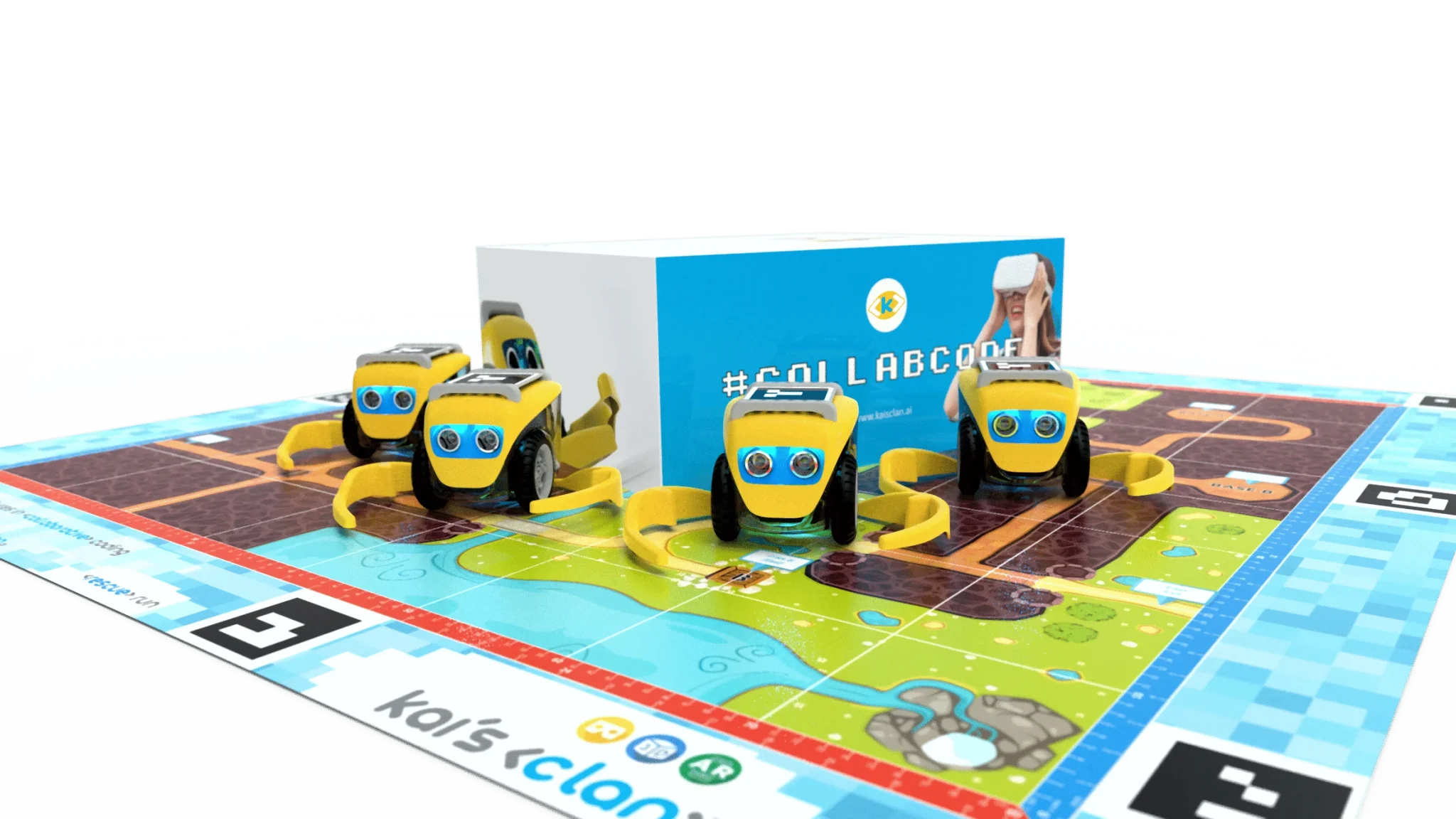
KaiLab, formerly known as Kai’s Clan from Kai’s Education, is a project-based learning ecosystem for Grades 5 to 10. It brings robotics, coding, AR/VR, IoT sensors, and real-time data together in a single instructional system built around themed adventure mats that each map to a high-growth career pathway.
Students are not just coding a robot to cross a mat. They are navigating an automated warehouse and understanding why supply chain optimization matters. They are building a smart city transport grid and debating the ethics of autonomous systems. They are collecting environmental sensor data from a water cycle simulation and making infrastructure decisions under pressure.
This is not engagement for engagement’s sake. This is the thinking, communication, and problem-solving behavior that employers in every Perkins-aligned career cluster are actually looking for.

The Compliance Case Is Already Made
For CTE Directors who have to justify purchases through a Comprehensive Local Needs Assessment, KaiLab makes the job easier.
Every lesson plan is pre-aligned to CSTA, TEKS, and NGSS. The cross-disciplinary standards mapping is already documented. The equipment qualifies as industry-grade instructional hardware. The software platform qualifies as CTE curriculum. Both remain property of the program, not individual students, which satisfies federal compliance requirements without any additional work on your end.
And on equity: Perkins V requires demonstrable support for special populations. KaiLab’s role-based lesson plans differentiate naturally, with beginners and advanced coders working toward shared goals at different levels of complexity. The companion KaiBot platform also includes Braille coding cards for visually impaired learners, making this one of the few EdTech solutions that takes Universal Design for Learning beyond a checkbox.
The Career Pathway Story Students Can Actually See
One of the hardest problems in CTE is not funding. It is relevance. Students need to see themselves in a career before they will commit to a pathway.
KaiLab makes that connection visible. On the Mars Discovery Mat, students understand systems thinking by running autonomous missions under real constraints. On the Automated Warehouse Mat, they see why logistics is one of the fastest-growing sectors in the US economy and exactly where human judgment still matters. On the Rescue Run Mat, they grapple with the ethics and design constraints of deploying robots in emergency response situations.
These are not simulations. They are career conversations. And they happen every class.
The Bottom Line
Perkins V funding is level for now. But the window to invest strategically in tools that genuinely modernize CTE programs is not infinite. Districts that move now are the ones that will have longitudinal outcome data, trained teachers, and proven programs when the next funding cycle requires them to demonstrate impact.
KaiLab gives you the tool to do that. Industry-aligned. Standards-documented. Equity-ready. Built for the career pathways your students are actually heading into.
The money is already allocated. The question is what you do with it.
Where to start with Funding
You do not need to navigate this alone. Here are the most useful resources for CTE Directors looking to understand and access available funding.
Federal Starting Points
The US Department of Education’s Office of Career, Technical, and Adult Education grants page at cte.ed.gov/grants outlines all federal CTE funding opportunities, including the roughly $1.4 billion in annual state formula grants and over $30 million in competitive discretionary grants.
For a plain-English breakdown of what Perkins V funds can and cannot be used for, ACTE publishes an annually updated Perkins 101 guide at acteonline.org. It is required reading for any CTE Director making equipment purchases.
Your State CTE Office
Every state has its own Perkins application process, timeline, and allowable cost guidance. Your state education department’s CTE office is where your actual allocation lives. A few examples for reference:
- Florida: org Perkins page
- Virginia: virginia.gov Perkins V page
- Texas: texas.gov Perkins page
Search your state name plus “Perkins V application” to find your specific portal.
Title IV-AStudent Support and Academic Enrichment)
Often overlooked, Title IV-A funds can cover technology, robotics kits, engineering equipment, and STEM education tools for expanding learning activities. These dollars sit outside Perkins and can be stacked with CTE funding for larger purchases. Check with your district’s Title IV coordinator on what has been allocated and how much is unspent.
Searchable Grant Databases
GetEdFunding (sponsored by CDW-G), GrantWatch, and Grants.gov all let you search active K-12 grants filtered by category. For robotics and STEM-specific opportunities.
Corporate and Foundation Grants
For smaller supplemental purchases or pilot programs, corporate foundations are an underutilised avenue. Verizon Foundation, Toshiba America Foundation (grants up to $5,000 for grades 6-12, reviewed February 1 and August 1 annually), and AFCEA Educational Foundation all fund STEM and technology programs in K-12. These are not replacements for Perkins dollars, but they can fund pilots that build the case for larger district investments.
Professional Development Support
Advance CTE at careertech.org is the best national resource for staying current on CTE policy, funding changes, and implementation guidance. Their state leadership network is also a useful channel for connecting with peers who have navigated similar purchasing decisions.
.
- See KaiLab in action: kaiseducation.com
- Explore CTE funding options: kaiseducation.com/stem-grants
- Request a demo: Schedule here
KaiLab (formerly Kai’s Clan) is an award-winning robotics and coding platform from Kai’s Education, designed for Grades 5 to 10.