Inclusion Is Not A Place.
It Is Whether a Student Can Participate.
Meaningful inclusion requires active student participation and independence, not just physical access to a classroom.
By Ronel Schodt, CEO, Kai's Education
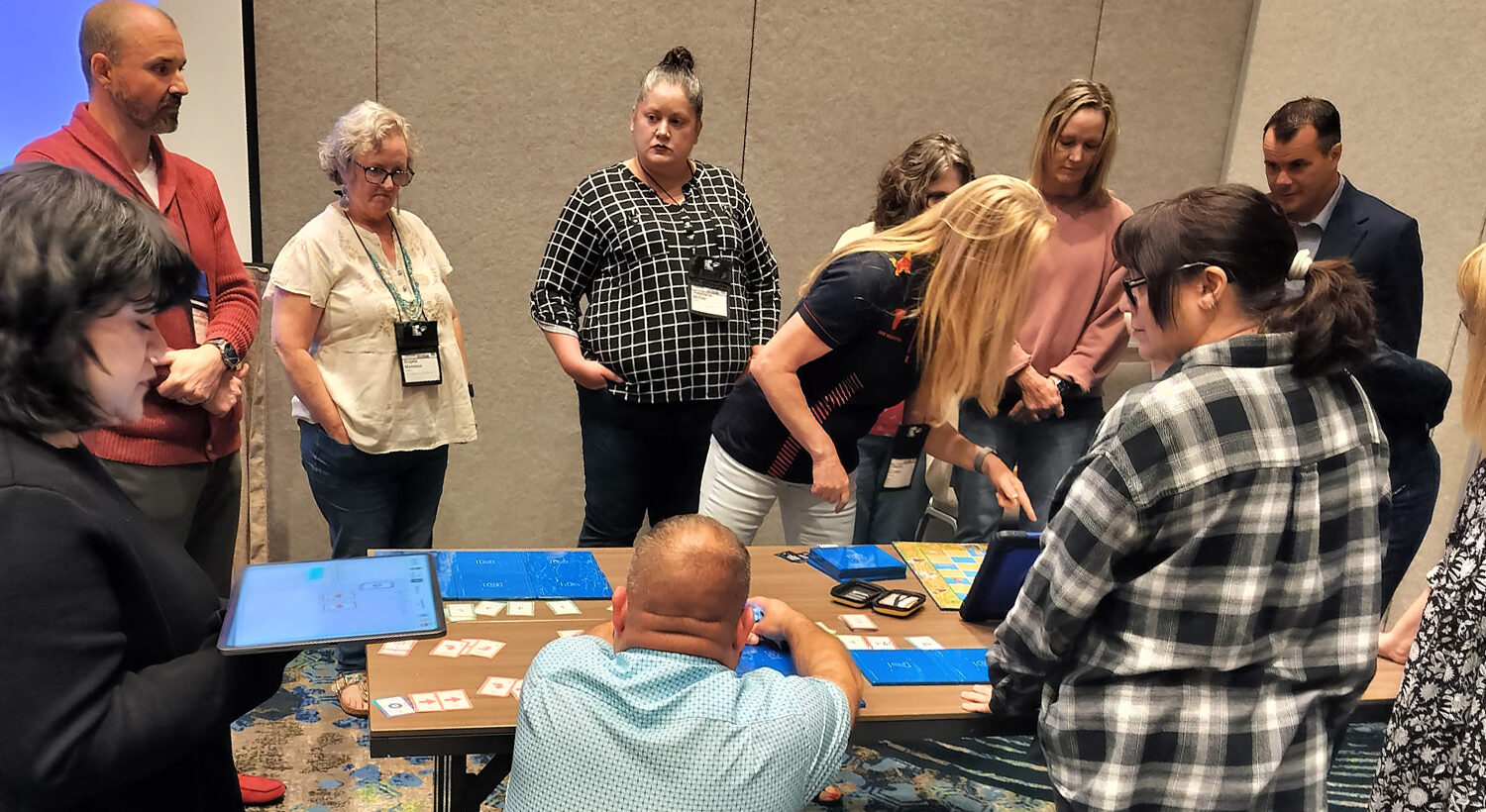
Photo taken at a presentation for Texas Association for Education and Rehabilitation (TAER) in 2026. Credit: Ben Davisson
I came away from the RTM Special Education Congress in Houston with a lot to think about.
One of the things I really enjoy about an event like RTM is that you get to sit down one-on-one with people who are actually dealing with these challenges every day. This time, I had the opportunity to meet with Executive Directors and senior leaders in Special Education from school districts across the United States.
The discussions were amazing. Every district was different, but there were some remarkably similar themes.
We talked about staffing shortages, teacher burnout, IEPs, autism, behavior, accessibility, Math and Literacy outcomes, MTSS, UDL, professional development and the challenge of giving students the individual support they need without placing even more pressure on teachers.
But one conversation kept coming back to me after the event.
We have made a lot of progress getting students into more inclusive learning environments. But being in the classroom and actually being part of the learning are two very different things.
The Pressure on Special Education Teams Is Real
I have always known that special education teachers have a difficult job, but sitting across the table from district leaders and hearing what their teams are dealing with really brought it home.
There simply aren't enough people. Teachers are stretched, specialists are stretched, and the complexity of student needs isn't getting any easier. At the same time, teachers are dealing with documentation, compliance, differentiation, curriculum, professional development and all the other demands that come with the job.
More than 8 million children were served under IDEA in 2024, according to the U.S. Department of Education. Behind that number are millions of individual students who learn differently and thousands of educators trying to work out how best to support them.
It made me think about our own role as an education technology company. If we introduce another resource into a school, it has to make things easier for teachers. We can't give them another complicated system to learn, another platform to manage or something that only works with one small group of students and sits in a cupboard the rest of the time.
That isn't helping.
The more conversations I had in Houston, the more I found myself thinking about what an inclusive resource should actually look like.
Ben Davisson Brought a Different Perspective
One of the best parts of RTM for me was having Ben Davisson, Statewide Visually Impaired and Deafblind Specialist at ESC Region 11, join us for these conversations.
Ben brought something I couldn't bring to the table. Experience.
When he talks about accessibility, he isn't talking about it as a product feature or a marketing term. He works with these students and teachers, so he understands what accessibility actually looks like in a classroom.
One of the points Ben kept coming back to was the difference between giving a student technical access to something and giving them meaningful access to the learning.
A blind student can physically be in an inclusive classroom and technically have access to a resource, but still be excluded from what the rest of the class is doing.
That is a really important distinction.
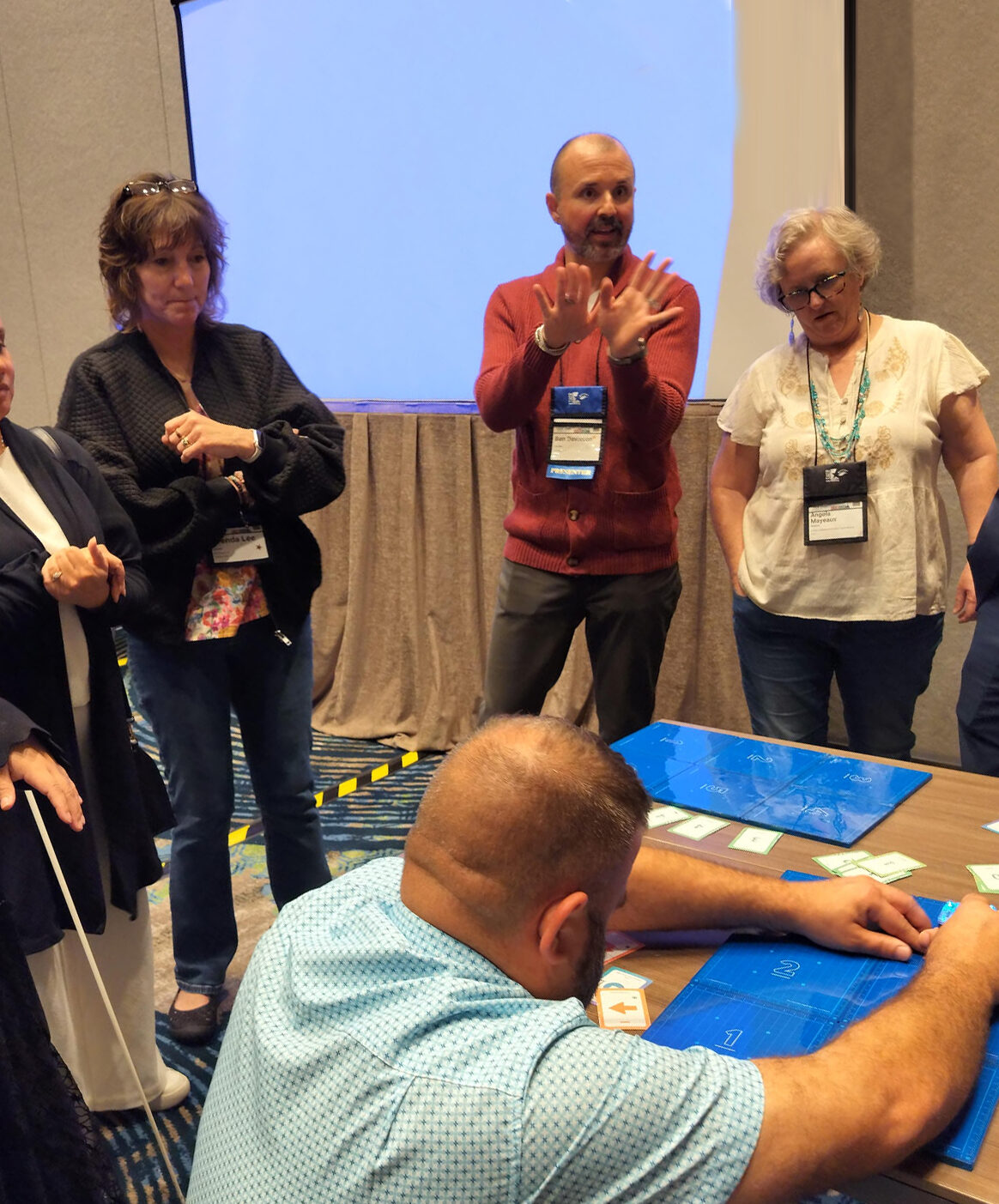
Photo taken at a presentation for Texas Association for Education and Rehabilitation (TAER) in 2026. Credit: Ben Davisson
It also reinforced something we have been working towards with KaiBot. Accessibility needs to be there from the beginning. It shouldn't be something we try to bolt on later.
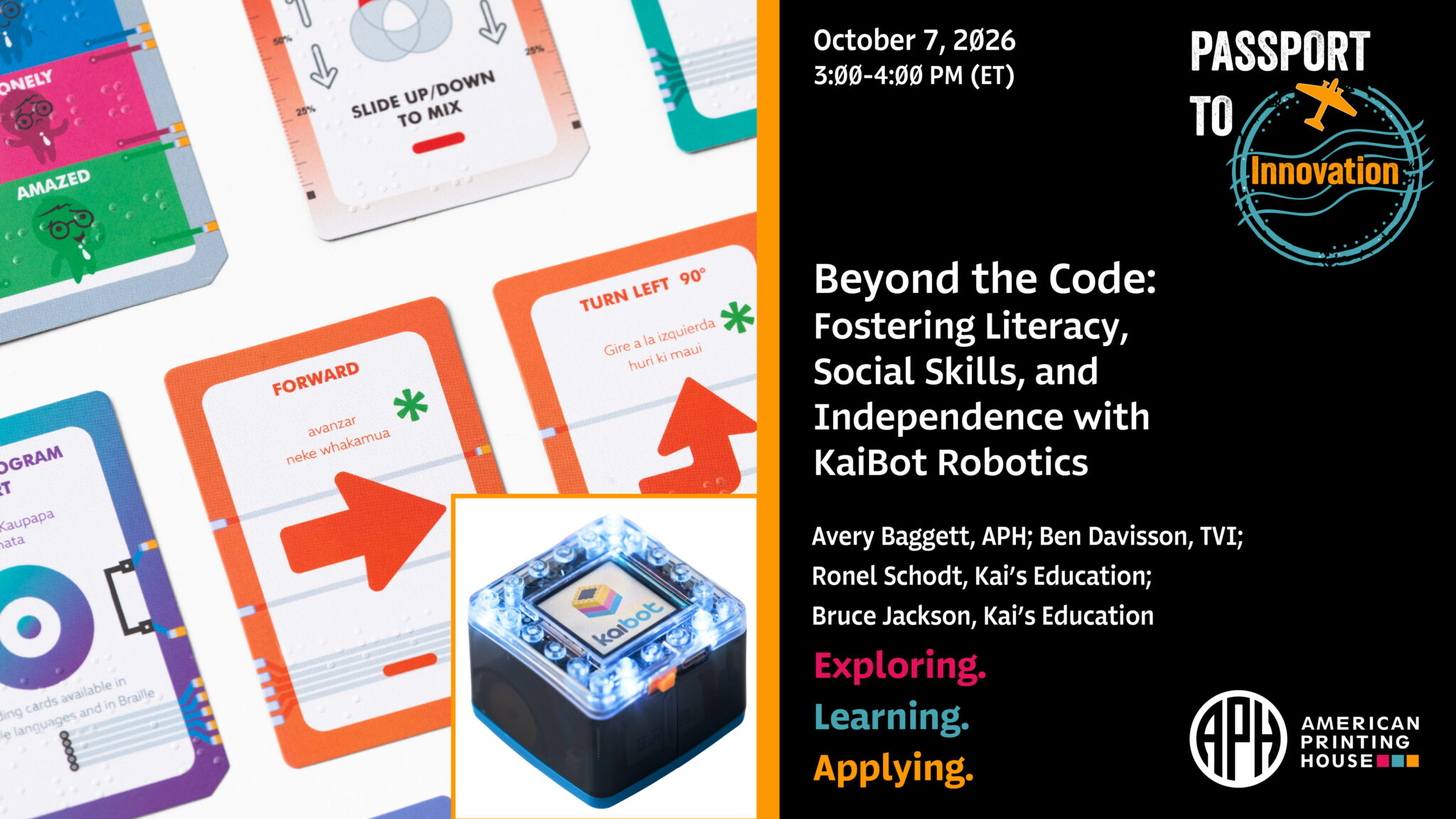
With KaiBot, one student might use our standard screen-free coding cards. A blind or low-vision student can use tactile or Braille coding and audio feedback. Another student might move from the physical cards into Blockly or Python.
They aren't necessarily doing three different lessons. They are accessing the same learning in different ways.
For me, that is what Universal Design for Learning should look like when you actually put it into practice.
What If the Resource Could Follow the Student?
This was probably my biggest takeaway from Houston.
We tend to put education resources into boxes. Something is a special education resource, a Math resource, a Literacy resource, a computer science resource or an accessibility resource.
But students don't fit neatly into those boxes.
So why should the resources?
This is where KaiBot has evolved into something much bigger than the coding robot we originally set out to build.

We can use KaiBot for Math through Market Math and KaiTiles. We can use it for Literacy and ELA through Literacy Kitchen. Students can learn computational thinking completely screen-free and then progress into Blockly and Python. We can use the same environment for Science, problem-based learning, communication and collaboration.
We have also developed Dragon of Disengagement, which takes KaiBot in another direction again. Dragon creates activities around social-emotional skills, communication, perseverance, collaboration and problem-solving.
I particularly like the potential for counselors. Sometimes sitting across from a student and asking, "What's wrong?" isn't going to get you very far. Giving that student and counselor something to do together can create a much more natural opportunity for conversation. They're solving a problem, making decisions and talking about what is happening along the way.
What I like about all of this is that it is still the same ecosystem.
The tactile interaction, Braille, audio feedback, screen-free learning and immediate error feedback aren't part of a separate "special education version" of KaiBot. They are part of KaiBot.
That means the same resource can move between a general education classroom, an inclusion classroom and a specialized classroom.
Instead of the student leaving the familiar resource behind when they move between environments, the resource can follow the student.
I think there is something really powerful in that.
Sometimes Special Education Should Lead the Way
We have already seen this happen in practice with educators such as Deann Poleon at Lake Shore Central School District.
Deann has used KaiBot with her Life Skills students, including students who need much higher levels of support. She can see what works, how students respond and where the barriers are, and then take those experiences into other K–5 classrooms.
I love that approach because it turns some of our traditional thinking around.
Why should special education always receive the adapted version of something designed for everybody else?
Maybe special education should sometimes be where we start.
If we can design something that is intuitive enough for a student who needs significant support, accessible enough for a blind or low-vision student, flexible enough for neurodiverse learners and still challenging and engaging enough for students in a general education classroom, then we haven't just created a good special education resource.
We've created a better education resource.
And perhaps that is the point.
From Conversation to Real Classrooms
One of the most exciting things to come out of Houston is that these conversations aren't going to end at the conference.
We are now talking with several of the districts we met about running pilot programs in their schools.
Rather than simply giving them KaiBot and asking whether they like it, we want to work with these leaders to identify different classroom environments and agree on the outcomes that matter to them. That could mean looking at engagement, participation, independence, collaboration, Math or Literacy outcomes, teacher implementation or how easily the same activity can be differentiated for students with different needs.
Some pilots may involve specialized classrooms. Others may involve inclusion or general education classrooms. Ideally, some will cross all three.
That is where this gets really interesting for me because we can start gathering real evidence about what happens when the same accessible learning environment follows students across different settings.
I left Houston incredibly optimistic. The Executive Directors and Special Education leaders I met care deeply about their students, but they are also very practical. They don't need another shiny piece of technology. They need resources their teachers can actually implement and that produce meaningful outcomes for students.
That is exactly what we want these pilots to explore.