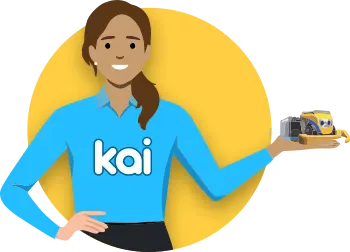
Fun with Mazes! Elementary Block Code Edition
Discover how maze-based coding adventures with KaiBot and Kainundrum turn classrooms into playful hubs of creativity, critical thinking, and cross-curricular learning! From constellations to amusement parks, explore how students can code, collaborate, and connect real-world concepts — no experience needed, just curiosity!
When?
11:00am, Thursday, 1 May NZT
5:00pm, Wednesday, 30 April MST
6:00pm, Wednesday, 30 April CST/CDT

Bruce Jackson

Olivia Yeo
Learning Labyrinths with KaiBot & Kainundrum
There’s nothing quite like traversing a labyrinth — each twist and turn winding into an endless maze. And who says they’re just for fun? Mazes are more than a game; they’re a gateway to discovery. In the classroom, they blend movement, challenge, and play — all while helping young learners develop essential problem-solving, sequencing, and critical thinking skills.
KaiBot + Kainundrum.com takes maze-based learning to the next level. Whether you’re using a full class set of KaiBots or simply exploring the virtual version online, these coding adventures are ready to go — and they go beyond just technology.
And the best part? It’s not just about coding. With every project, students explore real-world concepts through multiple subject lenses — from starry skies and emotional intelligence to carnival rides and creative storytelling. These activities meet your learners right where they are, and they’re perfect for classrooms looking to infuse a little magic into math, SEL, science, and more.
In this post, we’ll highlight three of our favorite projects featured on Kainundrum.com that help students code, think, and explore all at once — and yes, they’re completely free to access for ALL.

What is Kainundrum.com?
KaiBot is the starting point- Right at the bottom the stairs. While the coding staircase can seem to be scary, we provide you with the easiest starter: a screen-free robot with so much to offer right out of the box. Students can code using physical coding cards (Also available with Braille!), fostering hands-on engagement, problem-solving, and collaboration without needing screens. But when you’re ready to expand into digital learning or integrate with classroom tech, Kainundrum bridges that gap.
Kainundrum Lite adds an accessible virtual layer with features like readback mode for early readers and a simplified interface for emerging coders. For a deeper dive, Kainundrum.com takes the screen-free experience and elevates it—converting coding cards into block.ly or even Python code, helping students transition from tactile to text-based programming.
Teachers tell us how much they love it for its flexibility and accessibility. Meanwhile, students are loving it for the game-like interactivity and storytelling potential- It’s engaging, it’s fun! It’s coding with purpose, play, and possibility.
Key Features:
- A colorful and engaging block-based drag-and-drop interface
- Works on nearly any device- iOS, Apple, Mac, Windows
- No login required – just visit and code
- Supports both physical KaiBots and fully virtual play. Able to view the 3d environment virtually
- Built for exploration, creativity, and curriculum integration. Simple to integrate into your classroom, and fun to pick up for students of all levels
- Converts KaiBot screen-free coding into visual or text coding automatically, bridging that gateway into the coding world (Blockly + Python)
- Provides plenty of accessibility options like Readback Mode—especially with Kainundrum Lite working as a companion app for diverse learners—and supports multiple languages including te reo Māori, Spanish, and Braille.

Three Cross-Curricular Maze Projects to Try
The Night Sky
Cross-Curricular Link: Science (Astronomy)
Coding Concepts: Loops, movement, sequencing
Students are able to code KaiBot to navigate constellations while learning about the stars. Whether it’s mapping Orion’s Belt or discovering Alpha Centauri, this activity connects coding with astronomy in a creative and visual way.
Learning Takeaways:
- Discover constellations and celestial navigation
- Practice spatial thinking and directionality
- Build logic skills while reinforcing earth and science content
Positive Relationships
Cross-Curricular Link: Interpersonal Connection + Literacy
Coding Concepts: Events, decision-making (if/else), storytelling
Guide KaiBot through real-life scenarios where empathy, kindness, and teamwork are key. Students explore emotions and actions through coding narratives, Helping students turn abstract ideas like empathy, self-awareness, and collaboration into real, everyday actions they can understand and practice.
Learning Takeaways:
- Reflect on emotions, friendships, and collaboration
- Practice digital storytelling
- Develop communication and cooperative skills
Visit the Amusement Park
Cross-Curricular Link: Math + Descriptive Writing
Coding Concepts: Loops, distance commands, planning
From Ferris wheels to snack stands, students plan KaiBot’s route through a bustling amusement park while solving math problems and writing about the journey. It’s coding meets creativity.
Learning Takeaways:
- Apply math operations and measurement in context
- Create vivid narratives using sensory language
- Strengthen planning and debugging skills
Coding– The Path to Deeper Learning?
Ready to get started? Head to Kainundrum.com and explore the three featured mazes mentioned above:
- The Night Sky
- Positive Relationships
- Visit the Amusement Park

No hardships or troubles, just sign up and play alongside your KaiBot; Or, if you don’t own a KaiBot (WHICH YOU SHOULD CHANGE!), you can still navigate the levels and mazes on Kainundrum.com. Plus, you can print activity sheets or extend learning with your own classroom challenges.
When kids code, it’s something more than just moving a robot — they think critically, engage their brain, communicate clearly, and connect across subject areas. So many aspects and neurons are firing within a young student’s brain as they code solutions. With KaiBot and Kainundrum.com, maze-based learning becomes a playful path to purposeful learning.
Some schools even have their Year 6 students design their own game levels — and then the Year 3 students get to test them out. How fun (and clever) is that!
So go ahead, let your students get lost in the maze. They just might find something a-maze-ing! Find us at Kai’s Education, or join the conversation on X (formerly Twitter) and Facebook. Also, come connect with our growing community on Discord or Facebook Group!
Written by Wilbur Schodt (AUT Student)