Eco-Heroes in Training: Celebrating World Environment Day with KaiLab (Formerly Kai's Clan) and KaiBot
June 5 indicates World Environment Day, a day across the globe that marks moments of awareness and action to protect the natural world. As climate challenges intensify and only grow all the more relevant, it’s more vital than ever to cultivate environmental literacy in classrooms to protect our planet– We only have the one!
KaiBot and KaiLab both help students immensely with connect coding and robotics to real-world sustainability concepts, offering immersive, hands-on learning that inspires environmental responsibility. Additionally, there is a whole range of lessons to be found, and with near-limitless sandbox tools, you can also make your own lessons on the environment!
Why Environmental Education Matters
To emphasize the urgency of our environmental emergency, I heavily urge you to consider these current statistics:
- Over 1 million species face extinction due to human impact– We’re eradicating the natural animals and their habitats! (UN Report).
- 2024 was the hottest year ever recorded, with 2023 being right behind it! Our global temperatures continue to grow exponentially to this day as polar ice caps melt. (World Meteorological Organization).
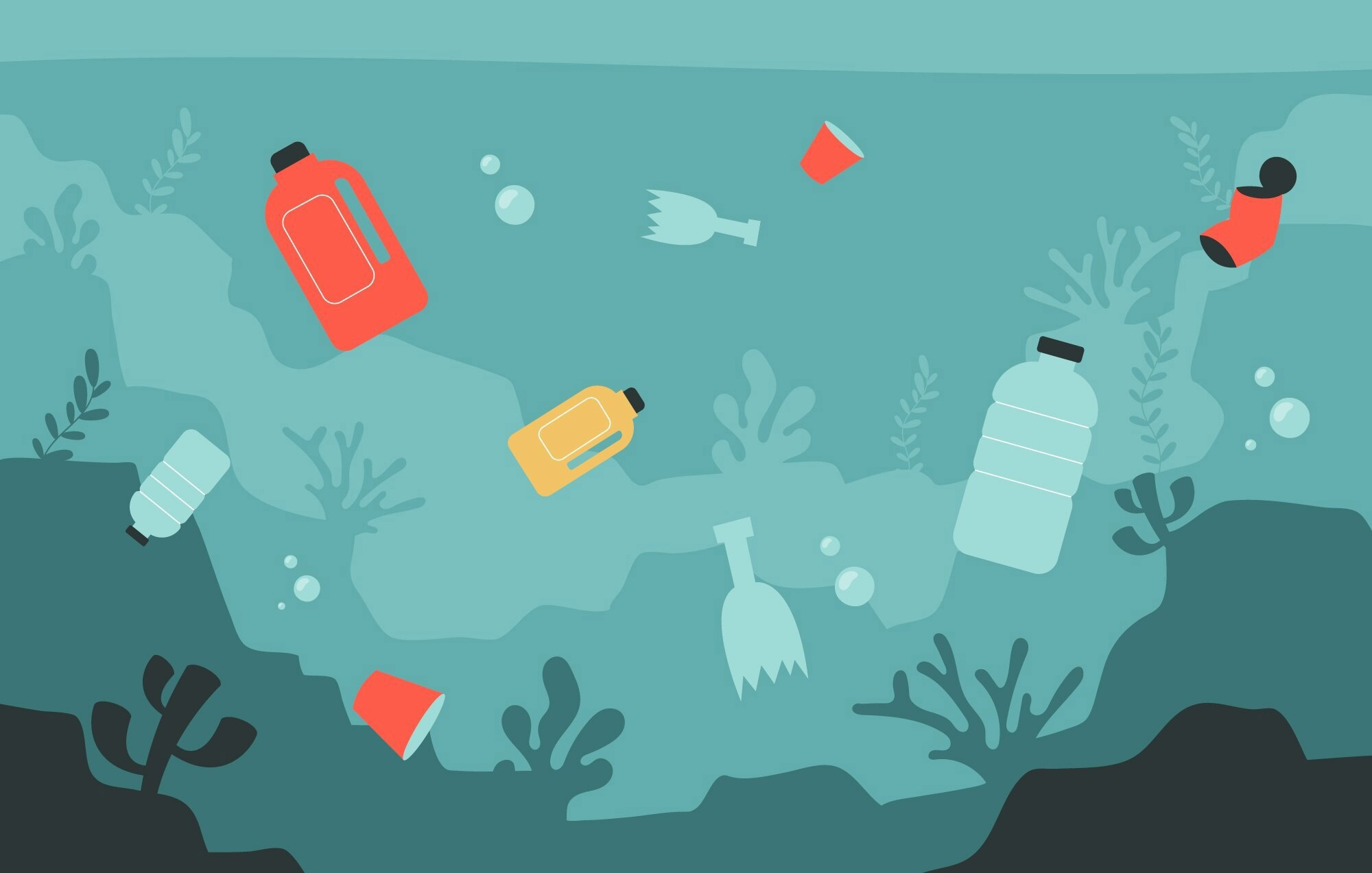
- Only 9% of plastic waste is recycled globally. Where does the rest go? Quite a bit accumulates in the Great Pacific Garbage Patch! (OECD Report).
Featured Environmental Lesson Plans with KaiLab & KaiBot
KaiLab Lesson: Plant Watering Autonomously
Overview:
Students build and test an automated plant-watering system using soil moisture sensors. They analyze data in spreadsheets to decide when watering is needed, applying computational thinking and real-world science.
You can check out the webinar we did on this subject here! https://www.youtube.com/watch?v=eiTmWlSWYB8
This hands-on coding activity helps students understand the water cycle, filtration, and plant sustainability by modeling a closed-loop water system.
– Focus Areas: Data collection, IoT systems, water conservation, sustainable design
KaiLab Lesson: Project Life Stream
Overview:
Students simulate the water treatment and filtration process using virtual pipe systems and QR codes shaped like T- and L-junctions. The activity illustrates the role of evapotranspiration and how natural processes purify and recycle water.
Check out the webinar we did on this water cycle mat here! https://www.youtube.com/watch?v=YyzE09nyJdY
This lesson connects design thinking with environmental systems, encouraging students to engineer efficient water flow paths.
– Focus Areas: Environmental systems, filtration, water conservation, cycle modeling
KaiBot Lesson: How Animals’ Features Help Them Survive
Grade Level: 1st Grade – Created by Heidi Williams
Overview:
Students observe how different animals are adapted to survive in various climates (e.g. fur thickness, nocturnal behavior). They use KaiBot and simple programming cards to simulate animal movements and features in specific environments.
The activity integrates science and coding to teach adaptation and habitat awareness.
– Focus Areas: Animal adaptations, survival traits, intro to coding logic
KaiBot Lesson: How Animals Change Their Environment
Grade Level: Kindergarten – Created by Heidi Williams
Overview:
Students explore how animals (and humans) alter their surroundings — from beavers building dams to people recycling. Using KaiBot, they design and code routes that simulate these changes, encouraging systems thinking and problem-solving.
This lesson also emphasizes the importance of environmental stewardship through technology.
– Focus Areas: Human/environment interaction, sustainability, early CS principles
Ambassador Spotlight: Join the Global Classroom Conversation
Calling all Kai Ambassadors and passionate educators!
How are you using KaiBot or KaiLab to explore environmental topics in your classroom this term?
We want to hear your stories — and feature them:
- Tag us on social media at KaisEducation, and we’ll share your stories and give you a shout-out!
Your students’ eco-projects could inspire teachers all around the world this World Environment Day!

Conclusion: Inspire Change Through Code
Environmental change starts with understanding, and that begins in the classroom. Whether it’s coding a beaver dam or designing a smart irrigation system, students can learn to protect their planet while mastering 21st-century skills. Environmental literacy doesn’t need to be something complex — it just needs to start, sooner rather than later. By combining coding, robotics, and sustainability themes, educators are shaping tomorrow’s problem-solvers.
This World Environment Day, commit to one sustainability-focused activity with your class — and we can ALL code a greener future together.
Find us at Kai’s Education, and drop us a follow on X (formerly Twitter) and Facebook. You can also connect with our growing community on Discord or our Facebook Group!
Learn more about World Environment Day here!