8 STEM Trends That Will Shape K–10 Learning in 2026
Every December, my inbox fills with the same question:
“So… what does next year actually look like for STEM?”
After spending thousands of hours with teachers, district leaders, and the occasional wide-eyed 8-year-old who can already out-debug me, here’s what I see coming in 2026. And yes, it’s big.
You’ll even spot two familiar faces from Literacy Kitchen and Market Math along the way—Marshie, the squishy optimist who believes every mistake is a plot twist, and Grouchy Cat, who… well… grouches his way through every coding challenge until he accidentally learns something.
1. Screen-Free to Hybrid Coding Becomes the New Normal
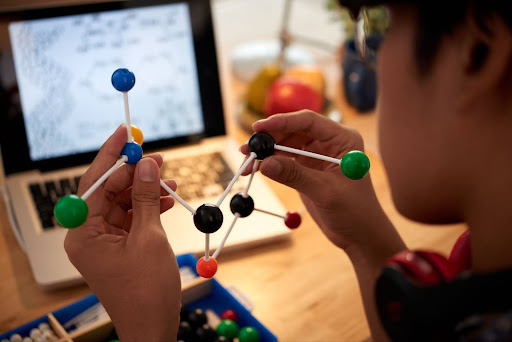
Kids want to touch their thinking before they see it on a screen.
The now-standard progression is becoming:
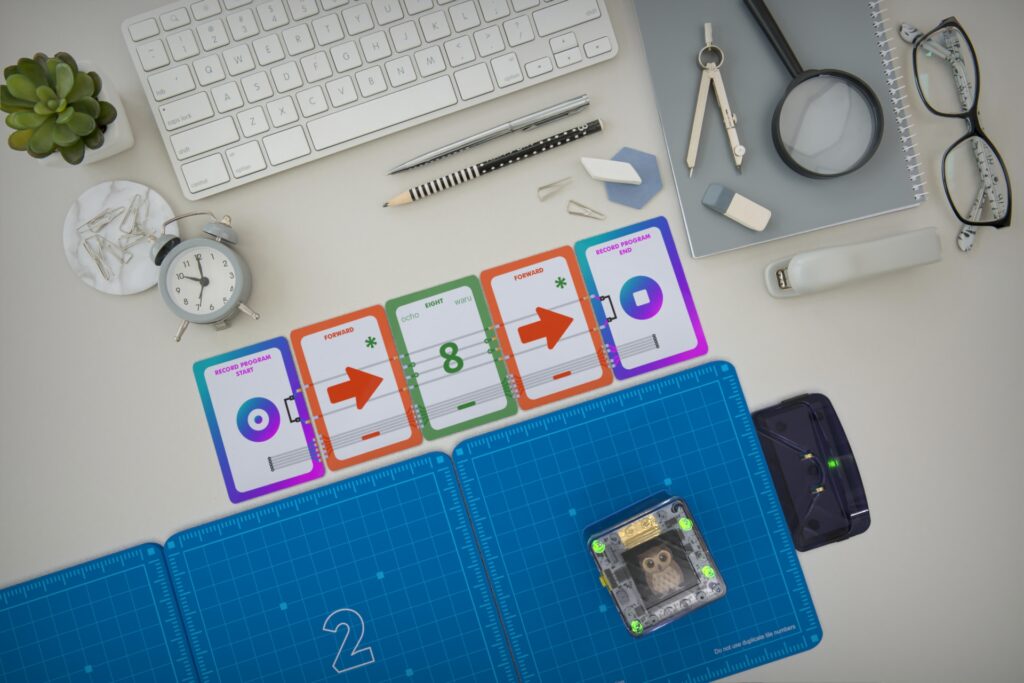
➡️ tactile coding → ➡️ block coding → ➡️ Python
especially in K–5, where physical exploration still drives cognitive growth.
Robotics that grow with students (like KaiBot) aren’t “extras” anymore—they’re the gateway that gives kids the confidence to make the jump to digital logic.
Here’s a quick clip from the Future Librarian App Smash webinar where KaiBot and Kainundrum.com tag-team the “screen-free to screen-smart” journey. It’s a perfect snapshot of how kids build competence physically, then level up digitally:
https://www.youtube.com/watch?v=qyLXnVhuA8Y
2. Computational Thinking Turns Into a Core Literacy
Students aren’t learning CT (Computational Thinking) just to become coders.
They learn CT to become better thinkers.
In 2026 we’ll see decomposition in literacy, algorithmic thinking in math, and debugging baked into SEL.
(If Marshie can debug his feelings, anyone can.)
3. Robotics Moves From ‘Cool Toy’ to ‘Skill Engine’
Robots are becoming the classroom’s most patient teaching assistant—predictable, tireless, and totally fine being rolled off a desk during an enthusiastic demo.
2026 emphasizes robots as tools for:
- collaboration
- communication
- resilience
- real-world modelling
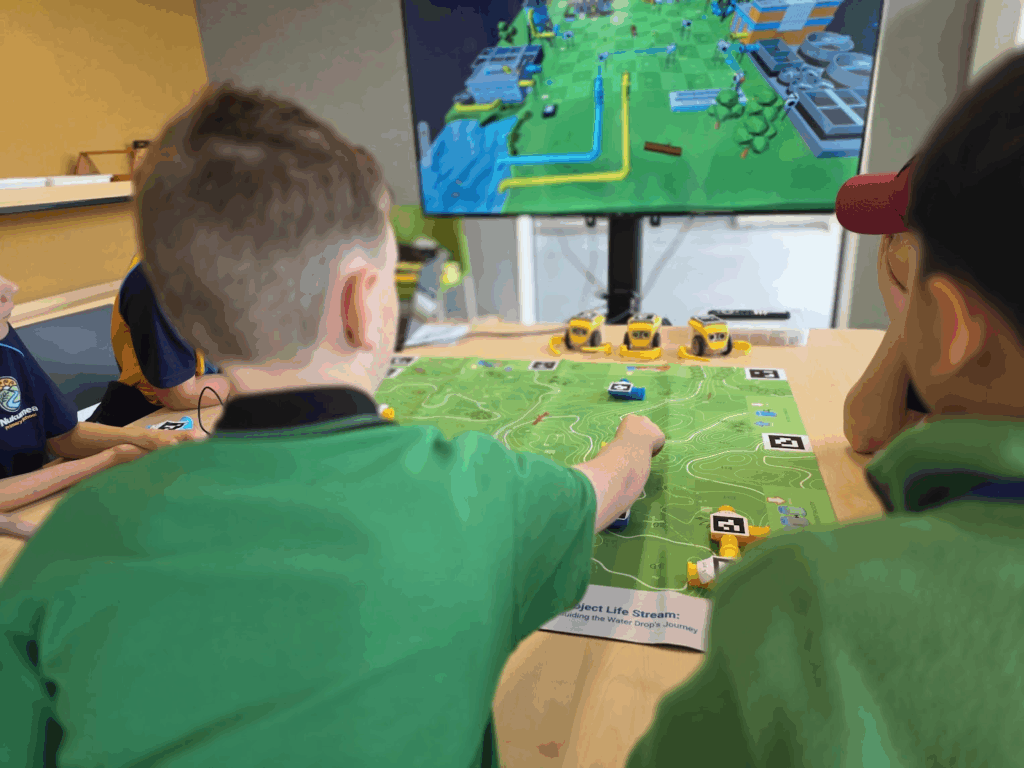
KaiLab in particular is blurring the line between simulation and science class. Students aren’t simply coding movement; they’re modeling ecosystems, transport grids, or warehouse logic in a way that feels like play but functions like engineering.
4. Industry 4.0 Sneaks Into Middle School
Sensors, digital twins, environmental data, autonomous navigation—this used to be “high school stuff.”
In 2026, Grades 4–8 start exploring it early. Imagine students building simplified warehouse logic systems… without needing a forklift licence.
5. UDL Isn’t Optional Anymore
Administrators aren’t asking whether tools are accessible; they’re asking how deeply they support every learner.
Expect higher expectations around:
- multilingual supports
- low-vision and non-reader features
- tactile alternatives to digital tasks
- choice-driven workflows
Accessibility becomes the deal-breaker. We already see that when tools offer flexible entry points, every student—even those who typically hang back—steps into STEM with more confidence.
6. Cross-Curricular STEM Takes Over
STEM is no longer a “tech class activity.”
In 2026, teachers blend STEM into:
- literacy
- math
- science
- SEL
- project-based learning
Characters like Marshie and Grouchy Cat have become shockingly effective literacy buddies. Grouchy complains the whole way, but he gets there.
7. Teacher Confidence Becomes the Battleground
Budgets aren’t the biggest barrier anymore—confidence is.
Next year’s winning districts will prioritize:
- PD that feels like play
- curriculum that fits into real instructional time
- tools teachers can learn in minutes, not months
Empowered teachers = empowered students.
(And empowered students = fewer tech-support requests from stressed teachers.)
8. AI Becomes the Co-Pilot, Not the Driver
Forget the dystopian headlines—AI in classrooms isn’t here to replace teachers; it’s here to amplify them. Students can benefit from adaptive scaffolds, real-time formative feedback, personalized tasks and pathways, student-generated puzzles, and gentle guidance through complex logic. At the same time, kids still need strong computational foundations—you can’t improve an algorithm if you don’t understand its logic.
Additional Case Study
How ESC Region 11 Empowered Every Learner With KaiBot
In 2025, Kai’s Education partnered with ESC Region 11 in Texas to deliver a four-day, hands-on professional development experience focused on building teacher confidence in computer science, robotics, computational thinking, and cross-curricular STEM. Using KaiBot, Market Math, Literacy Kitchen, and the full Kai curriculum ecosystem, educators explored how screen-free, accessible, and hybrid coding could support learners from Pre-K through Grade 12—including Special Education, Blind/VI, and Deafblind students.
The outcome was remarkable.
100% of teachers planned to use what they learned and 100% recommended the workshop—an unprecedented level of unanimous satisfaction. Educators reported large increases in preparedness to teach coding, robotics, physical computing, and CT, with motivation jumping as high as 92% in some areas.
Teachers praised the workshop’s hands-on exploration time, the accessibility features for VI/Blind and Deafblind students, and the immediate cross-curricular connections to math, literacy, spatial reasoning, and STEM. Many noted breakthroughs in confidence, which we were delighted to note:
“I made many mistakes, and it was good to learn from them.”
“I have confidence now — I didn’t before.”
Districts left with clear plans for implementation—some purchasing multiple class sets to ensure continuous access. Even when challenges arose (Wi-Fi, device compatibility, customs delays), educators observed our rapid response, with fixes deployed overnight.
In short:
ESC 11’s experience became a blueprint for how accessible robotics and high-quality PD can transform teacher capacity and student opportunity. It showed that when teachers are empowered, students across an entire region—thousands of them—gain new pathways into coding, problem-solving, and future-ready STEM learning.
So… what does this mean for schools in 2026?
The short version:
STEM becomes foundational, not optional.
The longer version:
We’re heading toward a world where creativity, logic, resilience, and digital fluency are the minimum entry ticket. The earlier students experience it—joyfully, playfully, boldly—the better prepared they are for whatever comes next.
And now we’d love to hear your take! Email hello@kaiseducation.com
If you could improve one part of your school’s STEM program in 2026, what would make the biggest impact?